
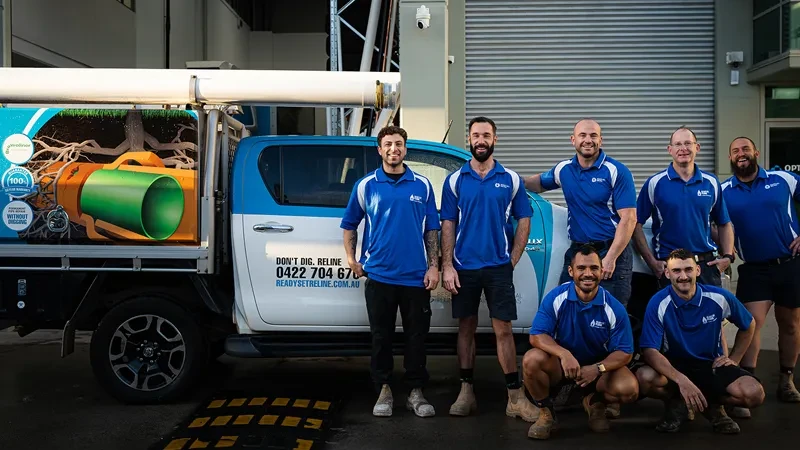
Ready Set Reline is a family-run pipe relining and patching specialist based in Roseville on Sydney’s North Shore. Our owner Ryan trained on-site at the Brawoliner factory in Germany, and every job is run to that standard. Repairs comply with the Plumbing Code of Australia and use WaterMark-approved materials meeting AS/NZS 3500 and you deal directly with the crew doing the work, never a subcontractor.
Pipe Patch Relining

What is it?

What is Pipe Patch Relining?

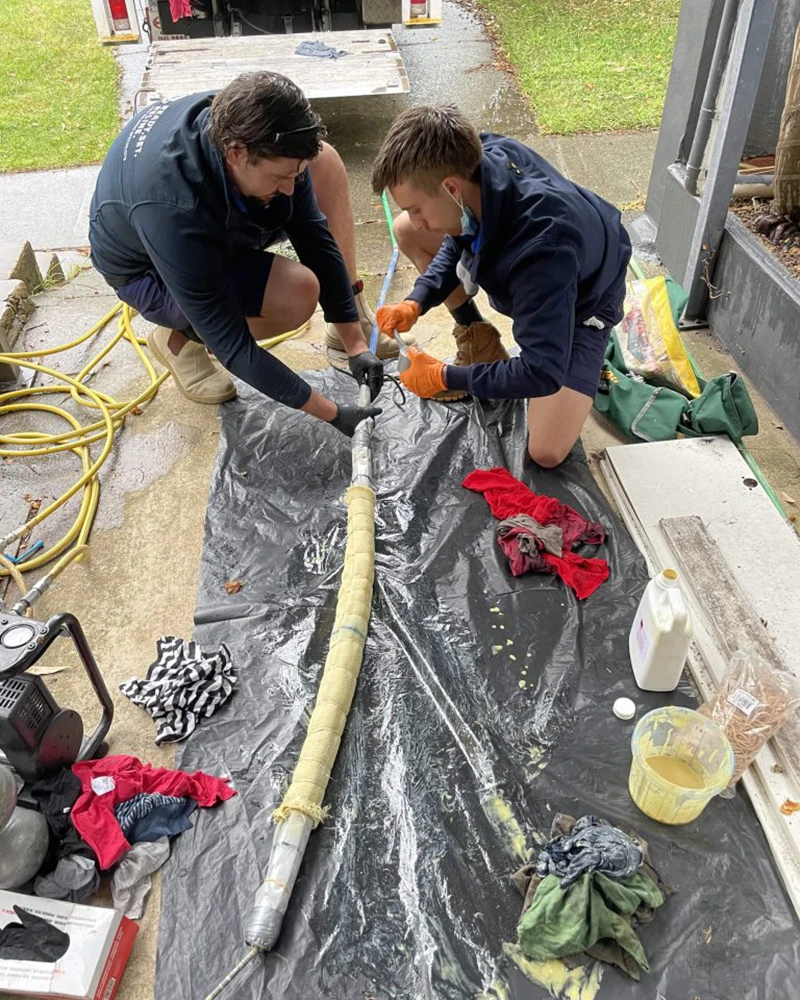
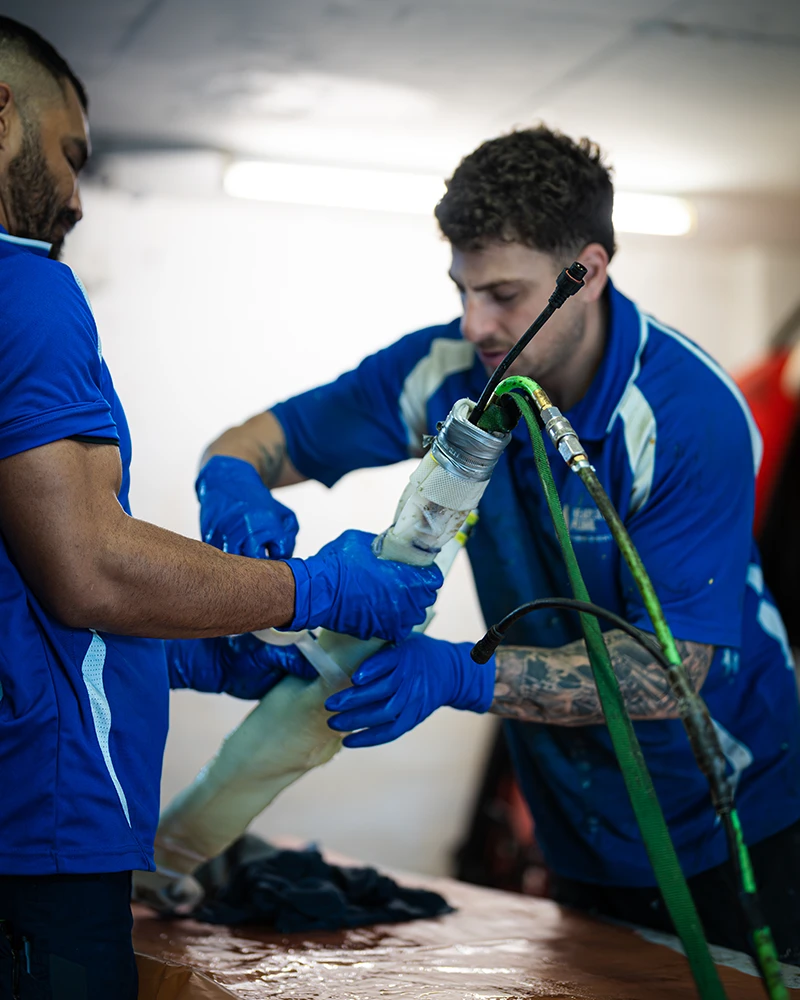
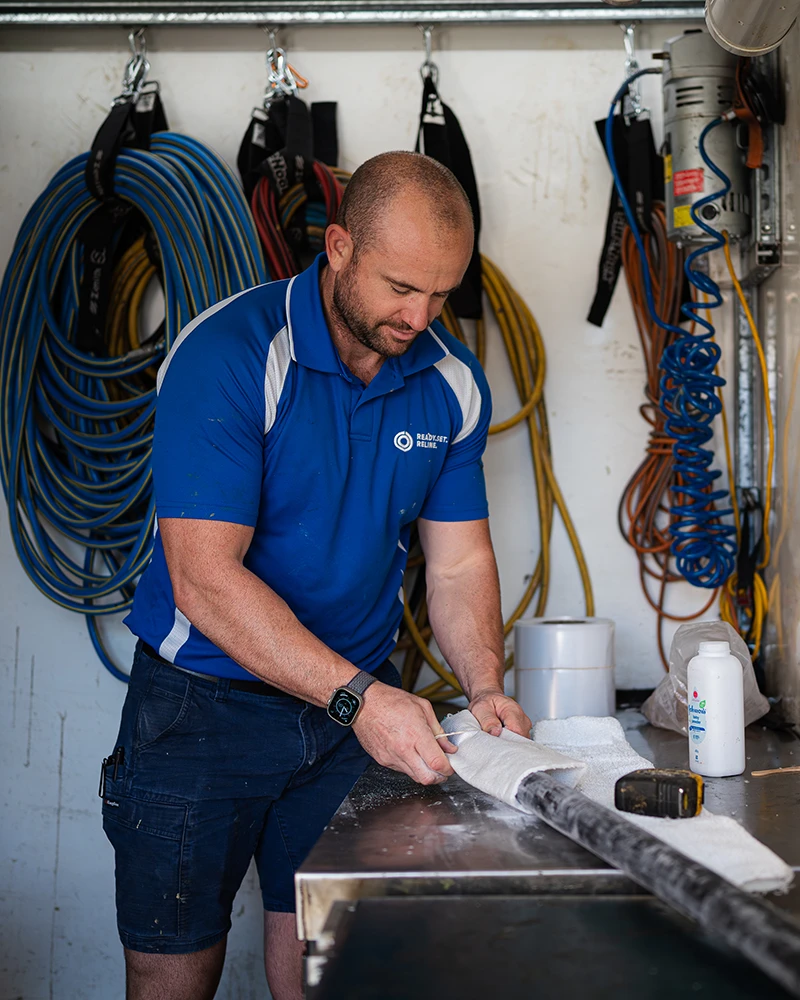
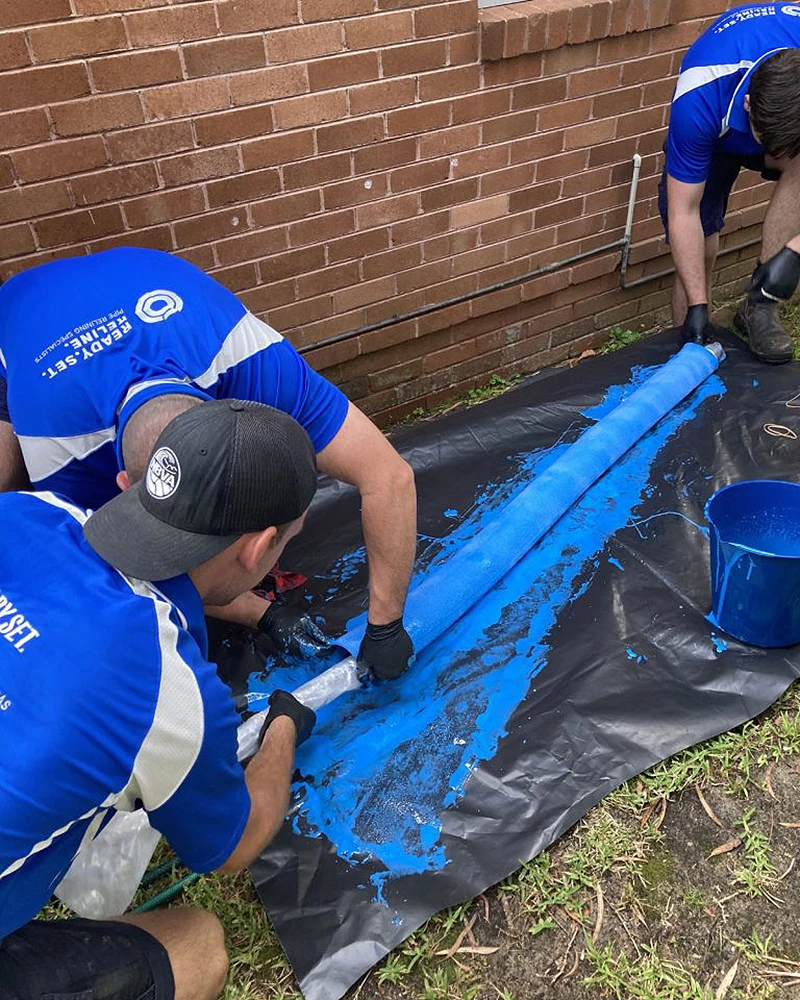
Pipe patch relining is a trenchless repair that seals a single damaged section of pipe from the inside, using a resin-saturated liner patch cured in place, without digging up the pipe. The patch is wrapped around an inflatable packer, positioned at the fault, then expanded so it presses against the pipe wall. Once the resin cures, the packer deflates and withdraws, leaving a sealed, crack-free section bonded permanently to the host pipe.

It’s the same cured-in-place technology used in full relining, applied surgically. Where a full reline rebuilds the entire run, a patch repairs only the metre or two that’s actually broken, which is why it costs a fraction of the price and is typically finished in a few hours.

Access is through an existing drain opening. No trench, no jackhammer, no reinstating your driveway afterwards.

Pipe Patching vs Full Pipe Relining

This is the question worth getting right, because choosing wrong costs you either money now or money again in two years.

Factor Pipe patch relining Full pipe relining
Repairs One isolated fault The entire pipe run
Typical length 0.5 m – 5 m 5 m – 30 m+
Time on site A few hours Usually one day
Relative cost Lowest Higher, but per-metre cheaper
Joins in the finished pipe Two (each end of the patch) None — fully seamless
Best for A single crack, hole or small misalignment in otherwise sound pipe Multiple faults, widespread root damage, corroded or ageing pipe
Weak point The rest of the pipe is untouched — new faults can appear elsewhere None
Warranty 50 years 50 years

If your CCTV footage shows one clear defect in an otherwise healthy pipe, patching is the smart, economical choice. If it shows several faults, general deterioration or root intrusion at multiple joints, a full reline is genuinely cheaper in the long run, because patching each fault separately costs more than doing the lot once, and leaves untouched weak sections for roots to find later.

Honest Advice

When patching is the wrong answer

We’d rather talk you out of a patch than sell you one that fails. Patching isn’t the right call when:

Multiple heavy-duty patches would be needed.

At that point an inversion reline covers more metres with no joins, for less total cost.

The pipe is leaking along its length.

Ideally you only want to be patching at one identifiable point.

The host pipe is badly deteriorated.

A patch bonds to the existing pipe — if that pipe is crumbling, there’s nothing sound to bond to.

Roots are entering at several joints.

Seal one and they’ll find the next.

In each of those cases we’ll show you the CCTV footage and recommend a full reline instead, even though it’s the bigger job. Honest advice is cheaper for you than a repair that has to be done twice.

Step-by-Step

Our Pipe Patching Process

1

Free CCTV inspection

A drain camera locates the exact fault, its depth, its cause and its extent. You see the footage yourself.

2

Fixed written quote

One price, agreed before we start. Comparable written quote elsewhere? We’ll beat it by 10%.

3

Clean and prepare

High-pressure water jetting clears roots, grease and debris so the resin bonds to a clean pipe wall. Robotic cutting removes any hard obstructions.

4

Position the patch

A liner saturated with resin is wrapped around a packer sized to your pipe, then pulled in place to the fault and inflated against the pipe wall.

5

Cure and withdraw

The resin hardens in place. The packer deflates and comes out, leaving the damaged section permanently sealed.

6

Final CCTV inspection and handover

We re-inspect on camera to confirm position and cure, restore flow, and hand over your footage plus a 50-year warranty certificate.

Reviews

5-Star Pipe Relines, Sydney-Wide

5.0
from 366 Google reviews
Rating breakdown
5 353 4 11 3 0 2 1 1 1
Most mentioned in our reviews
Professionalism245
Punctuality205
Transparent Pricing180
Friendly & Polite155
Respect for property120

We had a completely collapsed clay pipe two meters underground. Ready Set Reline was the only firm that committed to fixing it without digging up the street and significantly inflating the cost. They quoted within 30 minutes, arrived exactly on time, and left the site spotless. Incredible work!

Mike Baldwin

Ryan and his team were absolutely fantastic! After struggling with a terrible sewerage smell, Ready Set Reline identified and fixed a blockage that no other plumber had been able to solve. They are punctual, knowledgeable, and an absolute pleasure to deal with. I cannot recommend them highly enough!

Mike Stirzaker

After putting off a major wastewater issue with endless ‘bandaid fixes,’ we finally hired Ready Set Reline. Pipe relining is a tricky job, and you truly get what you pay for, you want the absolute best so it’s ‘one and done.’ Their professionalism and unmatched attention to detail are exceptional.

Bob Algie

For a massive 40-meter sewer reline, I got multiple quotes from companies that had been around for 10+ years. Ready Set Reline won my business with a highly competitive price, industry-leading products, and significant expertise. The job was completed exactly as scheduled with perfect cleanup. Highly recommended.

Richard Tucker

A rare, all-around positive experience with a tradesman! For a massive 40m stormwater reline, Ryan stayed on site the entire time rather than handing the work off to juniors. He delivered on time and on budget, even showing us the finished results on his inspection camera. Honest 5-stars!

Christian Bindel

We had a major plumbing emergency with water flooding across our bathroom floor at 3:15 PM. Ready Set Reline answered immediately and had a plumber at our door by 4:30 PM! They provided transparent pricing, fast communication, and incredibly professional service. They are the only team I’ll call.

James Kwan

Patching a pipe

Where it works well

Pipes, Sizes and Packers we work with

Pipe materials we patch: clay, earthenware, terracotta, PVC, polythene, cast iron, copper, steel and asbestos cement.

Packers, sized and shaped to your pipe:

  • Straight packers — for straight runs, commonly 100/150 mm in 1 m and 3 m lengths, including slight transitions such as tapered reducers.

  • Bendy packers — for sections with a single bend, typically 100 mm and 150 mm diameters in 1 m and 1.5 m lengths, but up to 3 m lengths available.

  • Multiple bend packers — for runs with a series of bends or changeovers such as gullies, in sizes like 80/100 mm and 100/150 mm plus custom variants.
  • Small diameter packers — from 40 mm to 400 mm, custom-ordered to match domestic lines precisely.

  • Large diameter packers — 150 mm to 400 mm, for wider or specialised infrastructure.

Does patching reduce your pipe diameter? Marginally. The cured patch takes up a small amount of internal space, with most of our liners no more than about 3 mm, which has no practical effect on flow.

Cracked Pipes, Blocked Drains and Stormwater Faults we repair

Patch relining fixes:

  • Isolated cracks, fractures and holes in sewer or stormwater pipes
  • Small misalignments where sections have shifted
  • Root intrusion at a single joint
  • Localised corrosion or a failed section of an otherwise sound line
  • Damage found during a pre-purchase drain inspection

Signs you’ve got a pipe fault, recurring blockages that keep coming back after jetting, slow-draining sinks and showers, gurgling toilets, foul smells around drains, damp patches or mould inside, an unusually lush green patch of lawn, soggy ground that never dries, cracked paths, or a sudden drop in water pressure.

Sydney’s older suburbs make this common. Pre-war homes on tree-lined streets sit on original clay and earthenware drains, and after heavy rain or through a dry summer, ground movement and root growth crack them at the weakest point, usually one joint, which is exactly what patching is built for.

Be sure to check out our article on how to fix cracked PVC pipe without replacement to learn more about the process.
Pipe Patching in Sydney

Service Area

Suburbs we serve across Sydney

Ready Set Reline is based in Roseville and delivers pipe relining services right across Sydney. We work daily through the North Shore, Lower North Shore, Northern Beaches, Eastern Suburbs, Inner West, Hills District and the CBD.

These are exactly the areas where pipe relining earns its keep. Sydney’s established suburbs are full of pre-war homes on leafy streets, where original earthenware and clay drains sit under mature trees, heritage gardens and paved driveways. Digging is expensive and often restricted, relining from the inside is not.

Artarmon
Asquith
Cammeray
Castlecrag
Chatswood
Cremorne
Crows Nest
East Killara
Eastwood
Epping
Gordon
Greenwich
Hornsby
Hunters Hill
Killara
Kirribilli
Kurraba Point
Lane Cove
Lavender Bay
Lindfield
Longueville
Marsfield
Mosman
Mount Colah
Mount Kuring-gai
Naremburn
Neutral Bay
North Epping
Northbridge
North Sydney
Pennant Hills
Pymble
Roseville
South Turramurra
St Ives
St Leonards
Thornleigh
Turramurra
Wahroonga
Warrawee
Waverton
West Pymble
Willoughby
Wollstonecraft

Balgowlah
Beacon Hill
Belrose
Brookvale
Collaroy
Dee Why
Fairlight
Forestville
Frenchs Forest
Killarney Heights
Manly
Narrabeen
Newport
Queenscliff
Seaforth
Warriewood
Bellevue Hill
Bondi
Double Bay
Elizabeth Bay
Millers Point
Paddington
Randwick
Rose Bay

Annandale
Ashfield
Balmain
Dulwich Hill
Forest Lodge
Glebe
Leichhardt
Lewisham
Marrickville
Newtown
Rozelle
Stanmore
Strathfield

Baulkham Hills
Beecroft
Bella Vista
Carlingford
Castle Hill
Cheltenham
Cherrybrook
Dural
Stanhope Gardens
West Pennant Hills
Winston Hills

FAQ

Pipe Patch Relining Frequently asked questions

Straight answers to the things people ask us most when something’s gone wrong.

A cracked or damaged pipe can be repaired from the inside using trenchless patch relining. A resin-saturated fibreglass patch is inserted on an inflatable packer, expanded against the damaged section and left to cure, permanently sealing the fault without excavation. The repair is accessed through an existing drain opening, so there’s no need to dig up or replace the pipe.

When only one defect is present and the remaining pipe is structurally sound, a 1-metre patch delivers the same long-term outcome at a lower cost, with no excavation required. Relining the entire run would mean paying to fix pipe that doesn’t need fixing.
Pipe patching repairs small holes, cracks or misalignments in an otherwise sound pipe. It’s used when only a short section is damaged and relining the entire pipe isn’t necessary or economical.
Pipe patching repairs a single damaged section, usually 0.5 to 1.5 metres, in a few hours. Pipe relining rebuilds the entire pipe run with a seamless, jointless liner and typically takes a day. Patching costs less upfront; relining is more economical when there are multiple faults, because sealing each one separately costs more than doing the whole line once.
Ready Set Reline patches pipes from 40 mm upwards, using packers matched to the pipe. Straight, bendy and multiple-bend packers cover most residential runs at 100 mm and 150 mm, and packers above 150 mm are manufactured to order for larger infrastructure.

The patch is a fibreglass, felt and polywoven sock saturated with silicate resin. Once cured inside the pipe it forms a hard, watertight seal bonded to the host pipe, leaving the section crack-free.

Only slightly. The cured patch takes up a small amount of internal diameter, with most liners no more than about 3 mm, which makes no practical difference to flow.
Ready Set Reline patch repairs clay, earthenware, terracotta, PVC, polythene, cast iron, copper, steel and asbestos cement pipes.